Real Estate Website Optimization: Turn Property Browsers Into Viewing Requests
Turn passive property browsers into booked inspections. Discover real estate website optimization strategies for local SEO, UI speed, and 24/7 AI conversions.
By Growth Kings. Published , updated . 16 min read.

Real Estate Website Optimization: Turn Property Browsers Into Viewing Requests
Most estate agency websites function as digital photo albums rather than sales engines. Thousands of visitors scroll through high-res photos on Sunday evening, look at floor plans, and close the tab without ever getting in touch.
Comprehensive real estate website optimization changes that dynamic entirely. According to the National Association of Realtors, 97% of all homebuyers use the internet in their home search process. Yet, the vast majority of agency websites convert less than 1.5% of that traffic into genuine inquiries.
When prospective buyers and motivated vendors land on your site, they are actively evaluating opportunities. Turning those passive browsers into booked private viewings and appraisal requests does not require a costly, six-month ground-up redesign. It requires identifying UX friction, aligning with hyper-local search intent, and deploying smart conversion mechanisms where intent peaks.
Key Takeaways
| Focus Area | Core Problem | High-Conversion Fix |
|---|---|---|
| Listing Pages | Buried inquiry forms and hidden agent availability | Sticky desktop/mobile booking bars with direct calendar slots |
| Gallery Speed | Heavy uncompressed images causing mobile drop-offs | Next-gen WebP formatting, lazy-loading, and responsive sizing |
| Local Search | Competing against massive aggregate property portals | Suburb-specific guides, localized inventory hubs, and schema markup |
| Response Time | High lead decay during evening and weekend browsing hours | 24/7 conversational AI assistants qualifying buyers instantly |
| Vendor Capture | Generic "Contact Us" forms delivering low seller volume | Hyper-local recent sales data and interactive instant appraisal workflows |
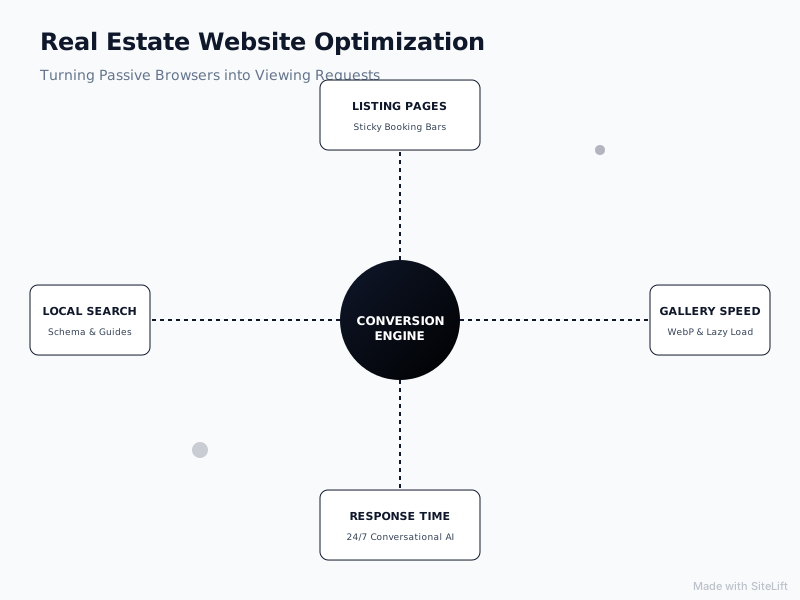
Infographic by SiteLift
Why Real Estate Website Optimization Fails When Treating Visitors Like Casual Browsers
Most agencies treat web visitors like passive window shoppers who simply want to look at pretty houses. In reality, real estate search behavior splits into two distinct modes: exploratory daydreaming and high-intent decision-making. When your website treats both types of visitors the same way, you lose the serious movers.
The Casual Browser Trap: Understanding Real Estate Visitor Intent
Exploratory visitors want endless scrolling, lifestyle photography, and aspirational architecture. Serious buyers and vendors, on the other hand, want specific logistical answers:
- What are the school catchment areas?
- What did neighboring properties sell for last month?
- Can I view this property on Tuesday at 5:30 PM?
When an agency builds a website solely around passive browsing, it prioritizes infinite image carousels over actionable information. High-intent users become frustrated when basic zoning, council tax bands, or body corporate fees are missing. The browser remains passive because the website provides no clear, compelling reason to take the next step.
Friction Points That Sabotage Viewing Bookings
The gap between browsing a property and requesting an inspection is where most conversions die. We frequently see agencies introduce self-inflicted friction:
- Forced Registration Gates: Demanding an email and phone number before a user can see three listing photos drives bounce rates through the roof.
- Buried Contact Details: Hiding agent details beneath paragraphs of generic marketing fluff forces motivated buyers to hunt for a way to reach out.
- Laggy Mobile Media: Unoptimized virtual tours and bloated asset files make listing pages stutter on handheld devices.
If someone has to wait four seconds for a gallery to open or pinch-to-zoom on a desktop-formatted floor plan, they will abandon the page and view the same listing on a third-party aggregator instead.
Why Traditional Contact Forms Repel Modern Buyers and Vendors
The generic "Enquire About This Property" form—with its five mandatory text fields and a static message box—is dead. Modern buyers avoid them because they represent an operational black hole. They have no idea if their inquiry will be read in ten minutes, two days, or never.
Furthermore, vendors looking for property appraisals do not want to fill out a 12-field form asking for their square footage and construction year before knowing if the agency actually operates in their immediate street. When property website enquiry conversion stalls, the friction usually sits inside these outdated forms. Today's consumer expects interactive, real-time feedback: self-selected viewing times, instant confirmations, and conversational interactions.
How Should Listing Pages Be Structured for Real Estate Website Optimization?
Your property listing page is the tip of your conversion spear. Treating it as a static brochure guarantees lower inquiry volume. Treating it as an interactive conversion portal turns casual page views into confirmed private viewings.
+-------------------------------------------------------------+
| [Listing Media Gallery - WebP, Core Web Vitals Optimized]   |
+-------------------------------------------------------------+
| Key Specs: Bed / Bath / Car / Price Guide / Neighborhood    |
+-----------------------------------------+-------------------+
| Detailed Floor Plan & Property Copy     | [Sticky Booking]  |
|                                         | Direct Calendar   |
| Interactive Local Area Data             | Instant Agent Chat|
+-----------------------------------------+-------------------+
Designing Above-the-Fold Real Estate UI for High Conversion
The top third of a property page must answer the buyer's critical questions immediately: price guide, exact address or sub-locality, bedrooms, bathrooms, parking, and availability.
Right beside or directly beneath these details, place a prominent, primary call to action: "Book a Private Inspection" or "Reserve Your Viewing Slot." Avoid vague labels like "Submit" or "Send Message." By clearly indicating the exact next step, you lower the cognitive barrier to entry. Pair this CTA with a direct photo of the listing agent and their direct contact line, humanizing the interaction instantly.
Pro Tip: Replace open-ended text fields with selectable viewing time chips (e.g., "Saturday 10:00 AM", "Tuesday 4:30 PM", "Request Custom Time"). Giving users a concrete, clickable option increases appointment requests far more than asking them to write a message.
Sticky CTAs and Frictionless Viewing Scheduling
As a visitor scrolls through the property narrative, past the floor plan, and down to the neighborhood breakdown, the primary call to action should never leave their sight.
On desktop, implement a sticky sidebar card that tracks along with the scroll. On mobile devices, introduce a clean, bottom-anchored sticky bar containing two straightforward options: "Call Agent" and "Book Inspection."
When the user taps "Book Inspection," avoid routing them to a fresh URL. Instead, open a lightweight modal or calendar interface right on the page. Eliminating unnecessary page reloads keeps prospective buyers anchored in the emotional experience of the property while completing their booking.
Mobile-First Property Gallery Optimization and Speed
Property shoppers are mobile shoppers. If your listing galleries are serving uncompressed 6MB raw camera files, mobile performance drops immediately. Following Core Web Vitals best practices on web.dev, image assets should be served in modern formats like WebP or AVIF, sized responsively to the visitor's screen resolution.
To keep pages snappy without losing visual impact:
- Implement native lazy-loading on all gallery images beyond the primary featured photo.
- Reserve explicit width and height dimensions in your CSS to eliminate Cumulative Layout Shift (CLS).
- Host interactive 3D virtual tours behind a lightweight "click-to-load" placeholder image rather than loading external iframes on initial page render.
If your listing pages take more than three seconds to become interactive, you are losing serious buyers. Agencies looking to streamline their infrastructure should review 9 website performance optimization tips to stop losing impatient enquiries for an in-depth technical checklist.

What Local SEO Foundations Drive High-Intent Traffic to Agency Websites?
Portals like Zillow, Rightmove, and Realestate.com.au dominate broad keywords like "houses for sale." Trying to outrank them for generic high-volume queries is an expensive battle. However, local independent agencies hold an advantage in hyper-local, high-intent searches.
According to Google, mobile searches containing "homes for sale near me" and related hyper-local real estate queries have grown by over 200% year-over-year. Winning these motivated searchers requires methodical local seo for estate agents.
Targeting Neighborhood and Suburb-Level Keyword Intent
High-intent buyers search with geographic specificity. Instead of building one generic property catalog, build dedicated neighborhood landing hubs for every key suburb or district you serve.
These pages should not just be filtered database queries; they need genuine local value:
- Median sale price trends and historical appreciation over the past 12 months.
- School catchment breakdowns, public transit hubs, and walkability scores.
- Curated lists of recently sold properties alongside current active listings.
By establishing your agency as the definitive local authority on specific postcodes and neighborhoods, you earn rankings for high-intent search terms that property portals overlook. To make sure your mobile presentation keeps these local visitors engaged, apply the techniques from our guide on mobile website optimization for service businesses.
Real Estate Structured Data: RealEstateListing and LocalBusiness Schema
Search engines cannot appreciate high-end architectural photos, but they read structured data reliably. By implementing technical schema markup, you help search engines extract critical listing attributes directly into rich search snippets.
{
  "@context": "https://schema.org",
  "@type": "SingleFamilyResidence",
  "name": "42 Richmond Terrace",
  "description": "Renovated 4-bedroom Victorian home in prime central precinct.",
  "address": {
    "@type": "PostalAddress",
    "streetAddress": "42 Richmond Terrace",
    "addressLocality": "Paddington",
    "addressRegion": "NSW",
    "postalCode": "2021",
    "addressCountry": "AU"
  },
  "numberOfRooms": 4,
  "offers": {
    "@type": "Offer",
    "price": "2150000",
    "priceCurrency": "AUD",
    "availability": "https://schema.org/InStock"
  }
}
Consult the Google Search Central guidelines on LocalBusiness to structure your agency's head office and regional branch profiles alongside RealEstateAgent and SingleFamilyResidence entities. Doing this directly enhances your visibility in map packs and organic search carousels.
Connecting Google Business Profiles Directly to Property Inventory
Your Google Business Profile (GBP) is often the very first touchpoint a local buyer or prospective vendor interacts with. Leaving your GBP linked strictly to a generic homepage wastes valuable organic real estate.
Link your GBP secondary action buttons directly to your active listings page or an instant valuation landing page. Use Google Posts weekly to spotlight newly listed inventory with direct inspection booking links. When positive reviews cite specific neighborhoods, your agency reinforces its relevance for those exact geographical search terms.
How Do AI Conversational Assistants Capture and Qualify After-Hours Property Leads?
The typical agency day ends at 5:30 PM. The typical property buyer's search begins at 8:00 PM.
When an interested buyer finds a home while browsing late in the evening, waiting until 9:30 AM the next day to process their contact form introduces massive risk. Research from InsideSales and Harvard Business Review indicates that businesses that contact leads within 5 minutes are nearly 100 times more likely to connect and qualify them compared to waiting 30 minutes.
Deploying an AI assistant for property enquiries bridges this operational gap, turning nighttime visitors into qualified inspection appointments before your team opens their laptops in the morning.
The Reality of Evening and Weekend Property Browsing
Property decisions are emotional, collaborative, and frequently discussed over dinner or during quiet weekend downtime. If a buyer finds a property on a Saturday night and can only fill out a passive "contact agent" form, they will likely cross-reference other portals and book viewings with competing agencies offering instant self-scheduling.
A conversational assistant answers their immediate, pressing questions instantly:
- "Does this property include secure basement parking?"
- "Are pets allowed under the current strata regulations?"
- "What are the exact dimensions of the master suite?"
By feeding your listing data, disclosures, and floor plan specs into a trained AI model, you give after-hours visitors accurate answers right when interest is highest.
Qualifying Buyer Readiness and Mortgage Pre-Approval Automatically
Not every inquiry warrants an agent's immediate private attention. Unqualified viewings waste hours of valuable agent time. An intelligent conversational assistant gently qualifies the prospect before confirming an inspection.
Visitor: "I'd love to see the home on Elm Street tomorrow."
Assistant: "I can help set that up! Are you looking to purchase with finance pre-approval in place, or are you currently selling a home first?"
Visitor: "We have pre-approval sorted through HSBC and no chain."
Assistant: "Great! The listing agent has private viewing slots available tomorrow at 2:00 PM and 4:30 PM. Which works best for you?"
Without feeling interrogative, the system gathers critical context:
- Financing and pre-approval status.
- Timeline for purchase (immediate, 3 months, casual).
- Chain dependencies (cash buyer, vendor-buyer, first-time purchaser).
Instant Inspection Scheduling Without Agent Phone Tag
The traditional routine of phone tag—an agent calling back, missing the lead, receiving a voicemail, and trading emails—delays deals and frustrates buyers.
An AI assistant integrates directly with your team's CRM and calendar software. Once a buyer meets qualification parameters, the assistant surfaces real-time viewing windows, collects verified contact details, and books the private inspection directly into the listing agent's calendar. Both parties receive calendar invites and SMS confirmations within seconds, removing administrative overhead entirely.
Which Trust Signals and Valuation Hooks Convert Prospective Sellers and Landlords?
While listing pages naturally attract buyers, sustainable agency revenue relies heavily on securing new listings. A successful real estate agency lead generation strategy must turn visiting homeowners and prospective landlords into appraisal appointments.
Interactive Instant Valuation Tools vs. Transparent Market Reports
Many agencies attempt to capture vendors with a bare-bones form labeled "Free Property Appraisal." But vendors are hesitant to hand over their phone numbers just to receive an aggressive sales call.
To overcome this resistance, provide upfront value:
- Interactive Valuation Estimators: Allow vendors to input their address and see a real-time range based on recent local sales, asking for contact info only to send the complete, unredacted breakdown.
- Hyper-Local Suburb Market Reports: Offer quarterly PDF or digital market updates containing actual square-meter price trends, average days on market, and clearance rates in their neighborhood.
Providing useful data before asking for a commitment builds goodwill and naturally moves hesitant vendors down the funnel.
Showcasing Verified Local Case Studies and Recent Sales Data
Sellers choose agents based on proven results in their immediate vicinity. Instead of relying solely on general testimonials, build a dedicated "Recent Results" section that features:
- Street-by-street transaction history.
- Average days on market compared to the wider suburb benchmark.
- Specific sale prices achieved versus original guide prices.
When a homeowner sees that you sold a property three doors down from theirs for a record price in under fourteen days, trust is established before the first conversation even happens.
Pro Tip: Include a short, 30-second video case study on listing outcome pages where the vendor shares their experience. Real, unpolished vendor interviews convert far higher than standard written quotes.
Building Credibility Through Agent Specialization Profiles
Vendors hire individual agents, not faceless agency brands. Generic bio pages that read like resumes do little to inspire confidence.
Transform agent profiles into localized landing assets by featuring:
- The agent's career sales volume within that specific suburb.
- Direct links to their active listings and recently sold properties.
- Verified client reviews pulled directly from independent review platforms.
- A direct booking widget for a 15-minute introductory coffee or phone consultation.
Showing verified local results turns agent profile pages into steady lead generators. If you want to audit your agency's site structure against these principles, use our 21-point website optimization checklist to turn visits into qualified enquiries.
Editorial: Why the "Full Website Rebuild" is Real Estate's Most Expensive Mistake
Whenever an agency's inbound lead volume drops, the default reaction from leadership is almost always: "We need a brand-new website."
They commission an agency, spend tens of thousands of dollars, endure six to nine months of delayed wireframes, and launch a redesigned site that looks trendy. Then, inquiry numbers remain virtually unchanged.
Why does this happen? Because the fundamental friction was never aesthetic. It was operational and structural.
A visual redesign rarely fixes:
- Heavy uncompressed images slowing down property pages.
- Passive forms that make booking a viewing inconvenient.
- Complete silence when leads browse listings at 9:00 PM on a Sunday.
- Thin neighborhood pages that fail to rank for hyper-local search queries.
At Growth Kings, we advocate for practical, high-impact refinements over expensive overhauls. Improving your above-the-fold layout, speeding up media galleries, and deploying automated conversational qualification on your current platform will yield a far better return than starting from scratch.
Focus on eliminating user friction first. The visual elements can always be tweaked later.
— growth-kings.com

Turning Your Traffic Into Booked Inspections
Building a steady stream of inspection requests and vendor leads is an engineering problem, not a branding mystery. When you streamline mobile galleries, provide sticky viewing booking actions, dominate hyper-local search intent, and handle after-hours questions with conversational AI, your site changes from a passive catalog into an active sales pipeline.
You do not need to discard your current site to see meaningful growth. Strategic adjustments to your most critical listing templates often double lead flow within weeks.
If you are looking to turn more of your current real estate website traffic into verified inspection requests and seller appraisals, growth-kings.com specializes in practical, conversion-focused optimizations and 24/7 AI assistants that get the job done.
Frequently Asked Questions
What is the average conversion rate for a real estate agency website?
The typical conversion rate for an estate agency website sits between 0.5% and 1.5%. This counts visitors who request a viewing, ask for a valuation, or submit an inquiry form. High-performing sites that use sticky booking tools, fast-loading mobile pages, and after-hours AI assistants often see conversion rates between 3% and 5%.
How can an agency increase property viewing requests without redesigning the entire website?
You can boost inquiries by making practical adjustments to your existing templates. Swap open text boxes for clear viewing time slots, add a sticky "Book Viewing" button on mobile listing pages, improve image load speeds by switching to WebP formats, and deploy an automated after-hours chat assistant to respond to evening visitors.
Why is local SEO critical for estate agents competing against large property portals?
Major property aggregators rank well for broad terms like "homes for sale," but they rarely offer genuine local expertise. Independent agencies can outrank portals for long-tail, high-intent searches by building detailed neighborhood guides, publishing hyper-local price updates, and properly implementing LocalBusiness and RealEstateListing schema markup.
How do conversational AI assistants differ from standard real estate chatbots?
Standard chatbots rely on rigid decision trees that frustrate visitors with canned responses. Modern conversational AI assistants use natural language processing trained directly on your property data, floor plans, and local market details. They can answer specific property questions, qualify buyer readiness, and schedule viewings directly into agent calendars in real time.
What is the best way to generate seller appraisal enquiries online?
The most reliable method is offering genuine, upfront value instead of an immediate hard sell. Provide instant online property valuation estimates, localized suburb sales reports, and transparent case studies detailing recent sales. When vendors see verified track records in their immediate neighborhood, they are far more comfortable requesting a full appraisal.
Want this working on your own site?
Tell us what’s working, what’s stuck and what you want to improve. We will reply personally.